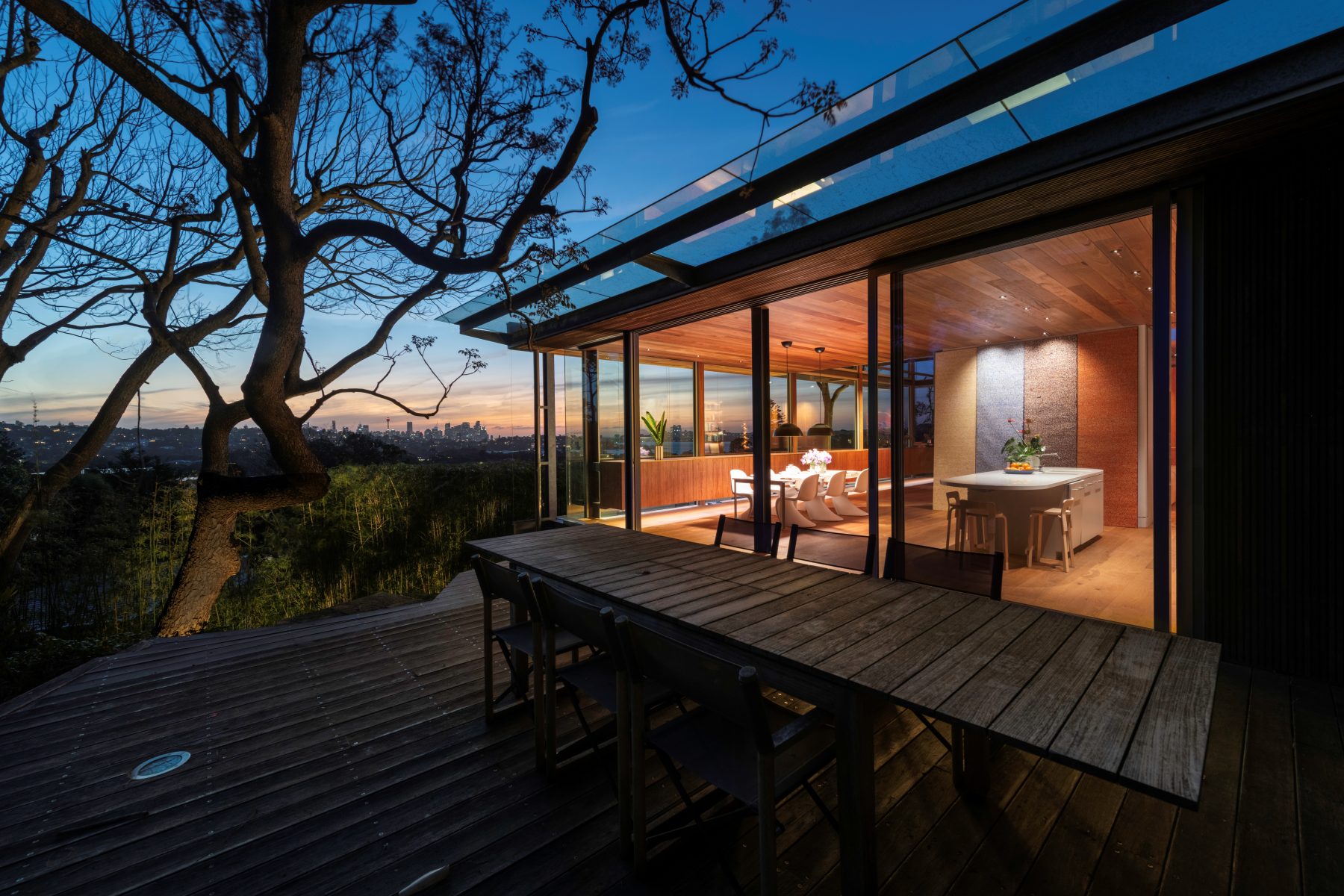
Casa Dos
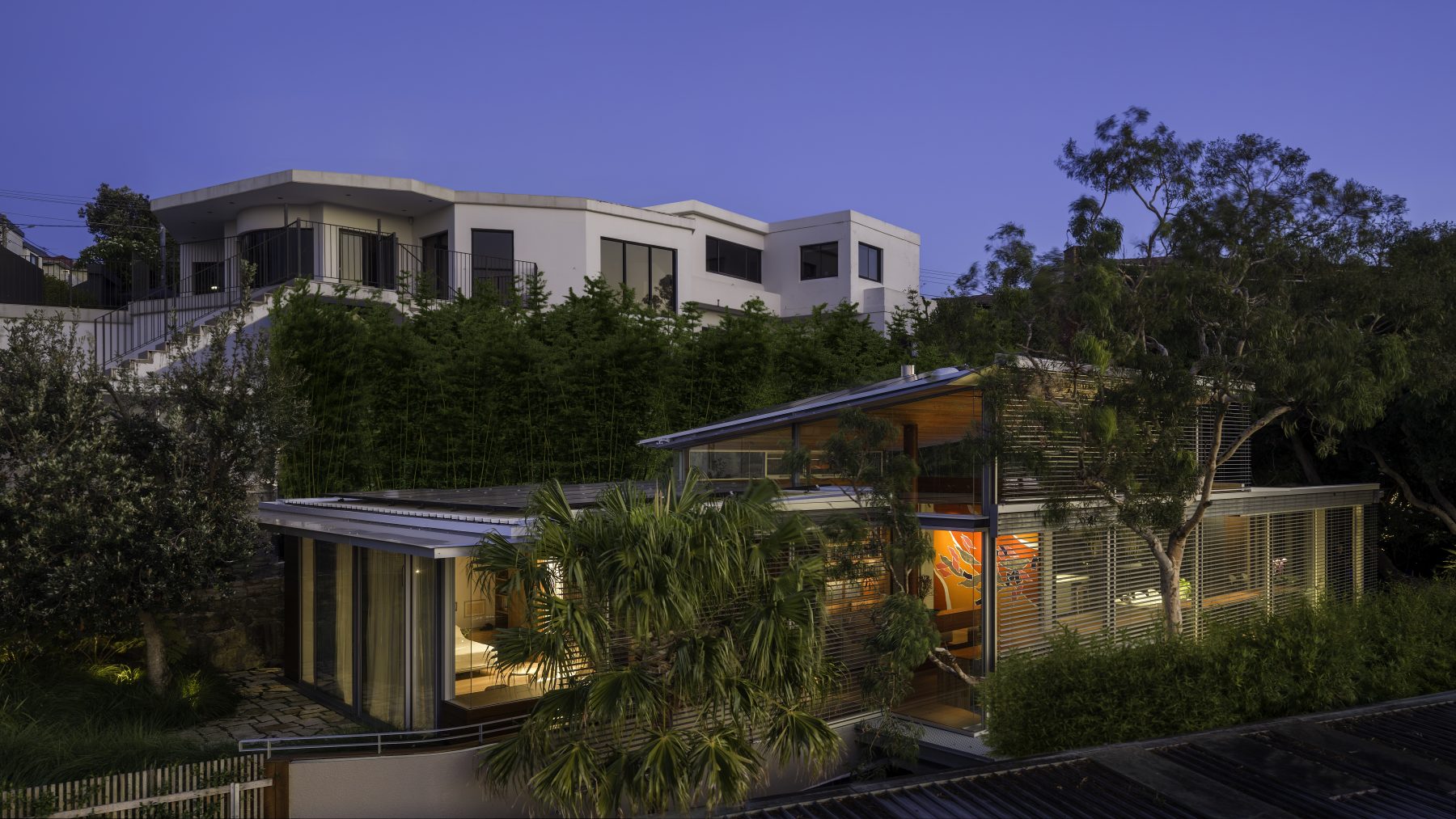
Casa Dos is a substantial renovation of a 1962 remodelling of a 1920s bungalow that had long been the Lippmann family home.
The initial concept sought to maximise the site’s development potential through a two-storey house that took full advantage of the allowable height and floor-space controls. Although a Development Application was approved, the proposal was ultimately abandoned in favour of a single-level home better suited to empty nesters whose children no longer lived at home. The project was never intended to be a monument, nor did it involve the wholesale demolition of the existing house. Instead, the design retained the bones of the original dwelling and enhanced it through a series of carefully considered and effective surgical interventions. Following the completion of construction documentation and the necessary approvals, construction commenced in 2023.
The site has no direct street access. It is reached either by climbing 35 steps from a cul-de-sac below or descending 42 steps from the continuation of the street above. While the site’s elevation and isolation present logistical challenges, they also create an unusually private living environment. This challenge became an opportunity.
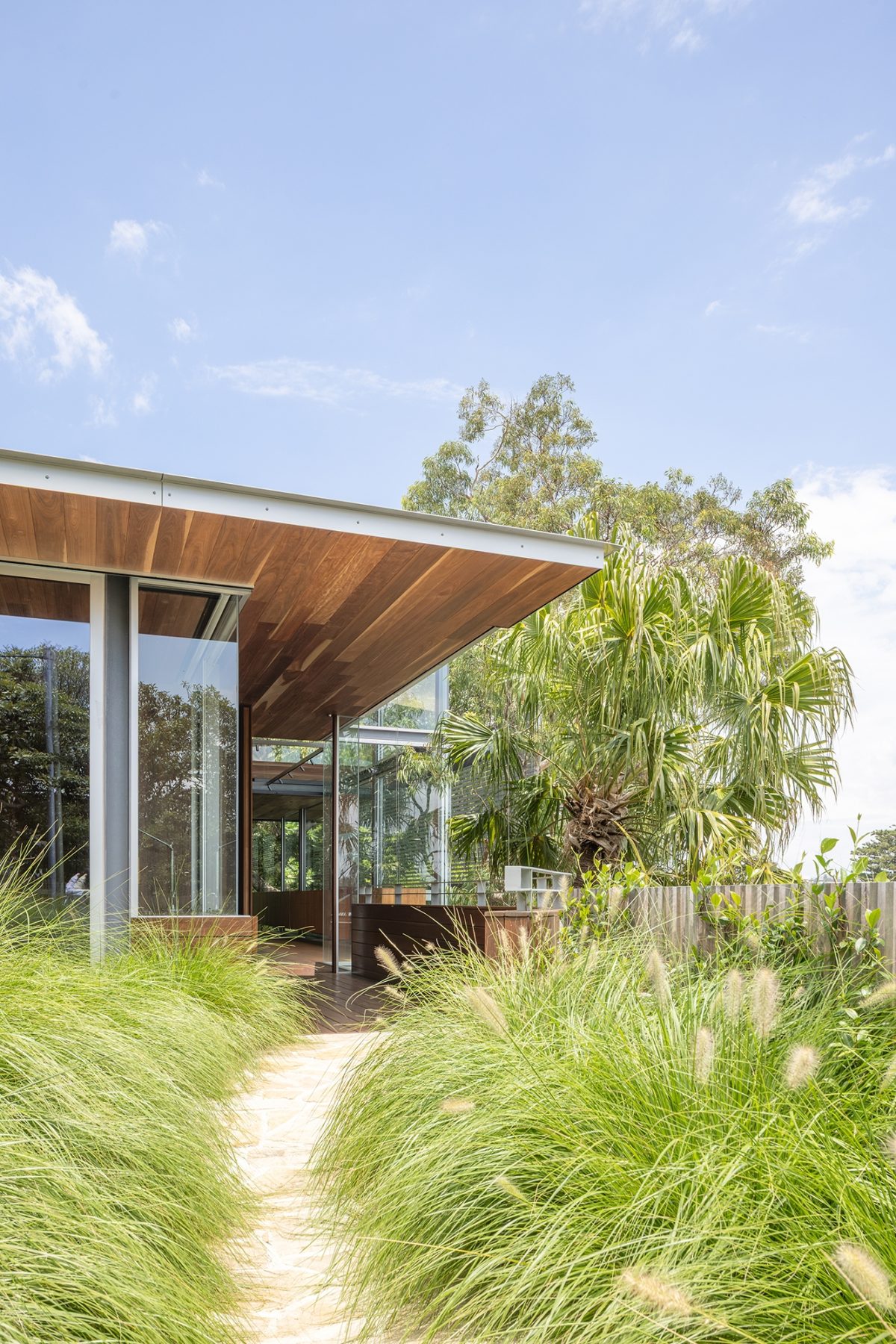
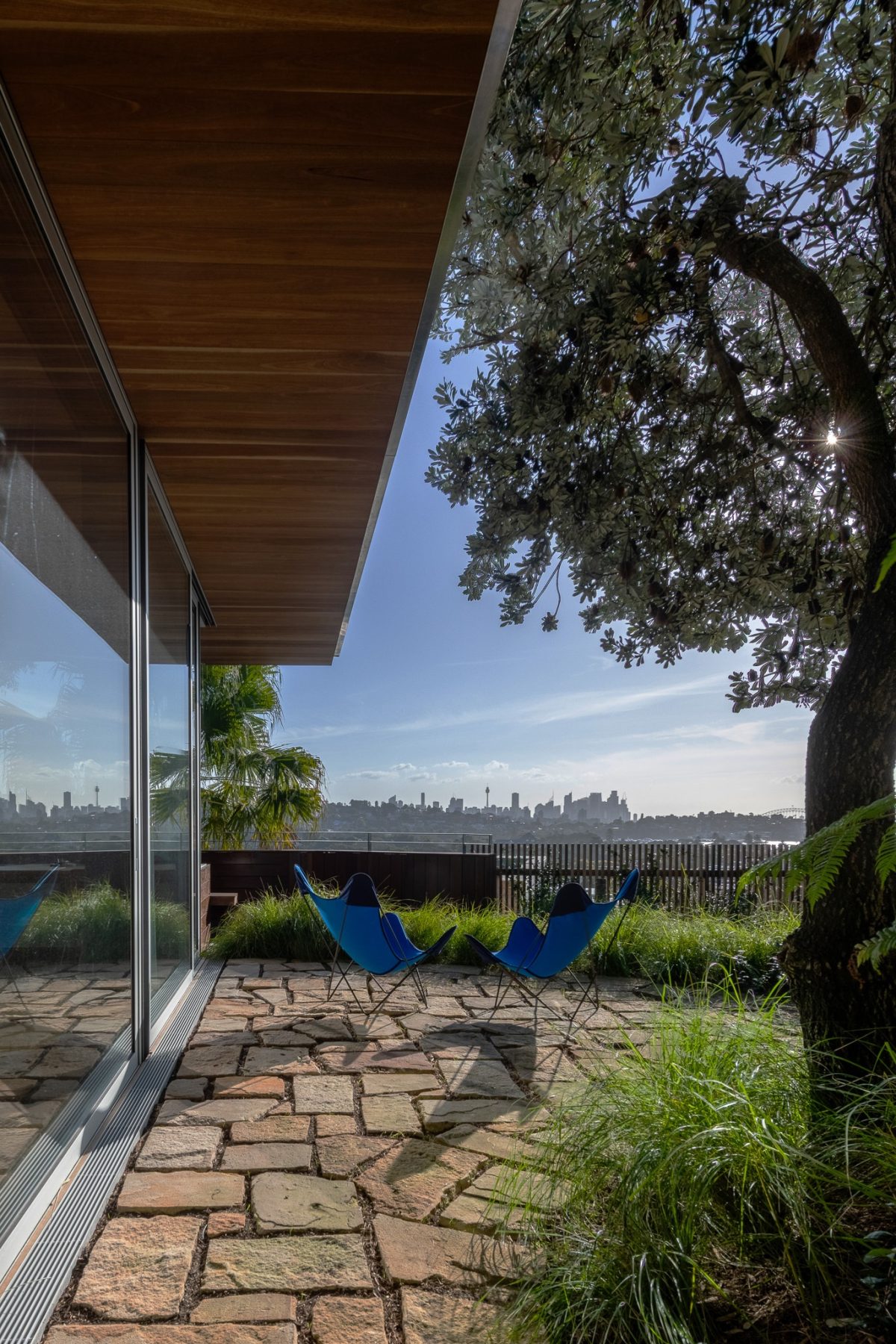
Although situated within a suburban subdivision, the property’s rocky terrain and bushland setting make it exceptional within a dense city such as Sydney. Landscape regeneration involved removing lawns and hedges and re-establishing native species, grasses and ferns. The only exotic planting is a bamboo screen along the perimeter, providing visual separation from neighbouring properties. This was critical in creating a private oasis.
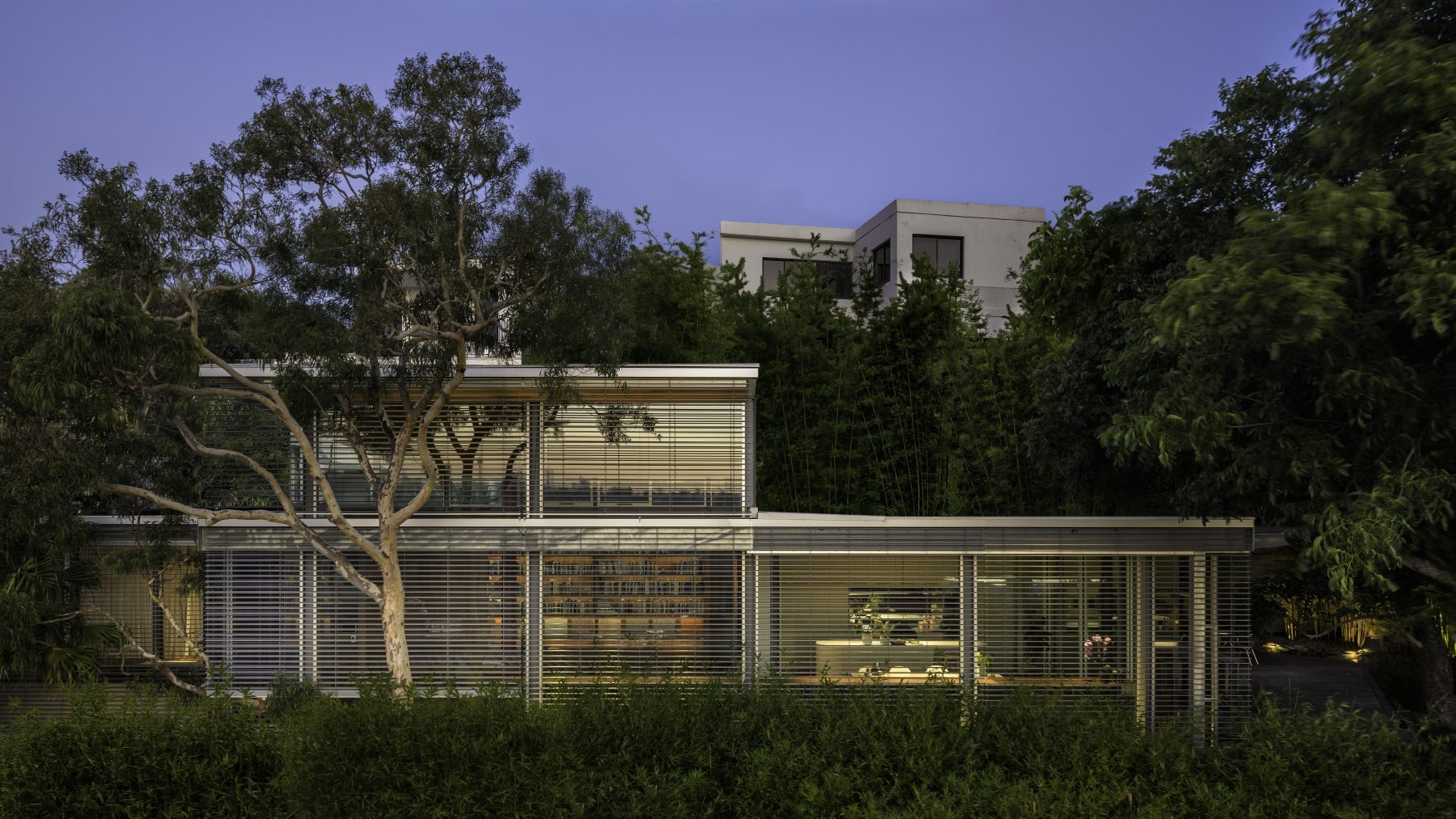
The house sits between front and rear bushland areas and is now almost incidental within the landscape. The building is a single-level, flat-roofed structure with a basement that follows the natural ground line. Its western aspect captures sweeping views across Sydney Harbour.
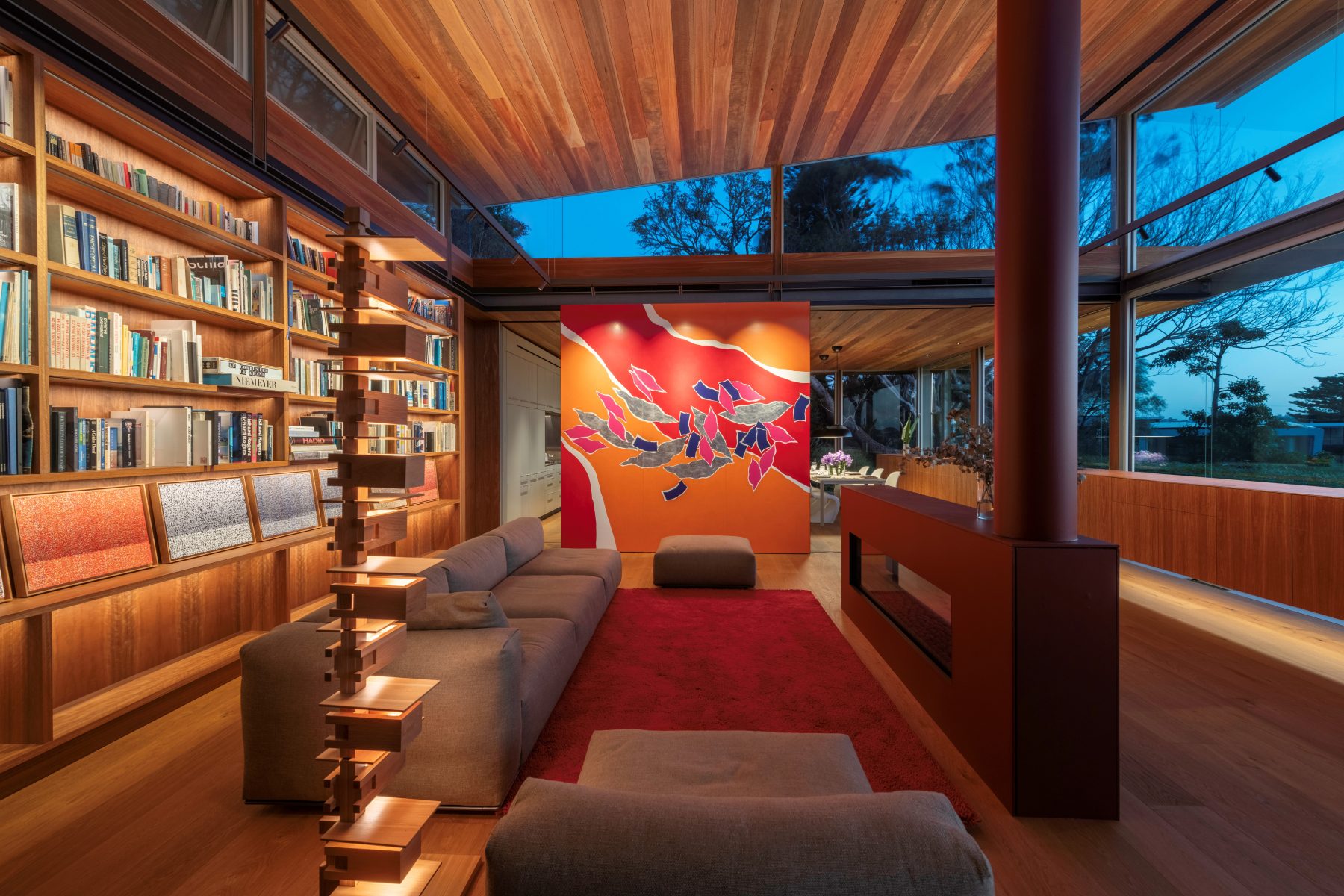
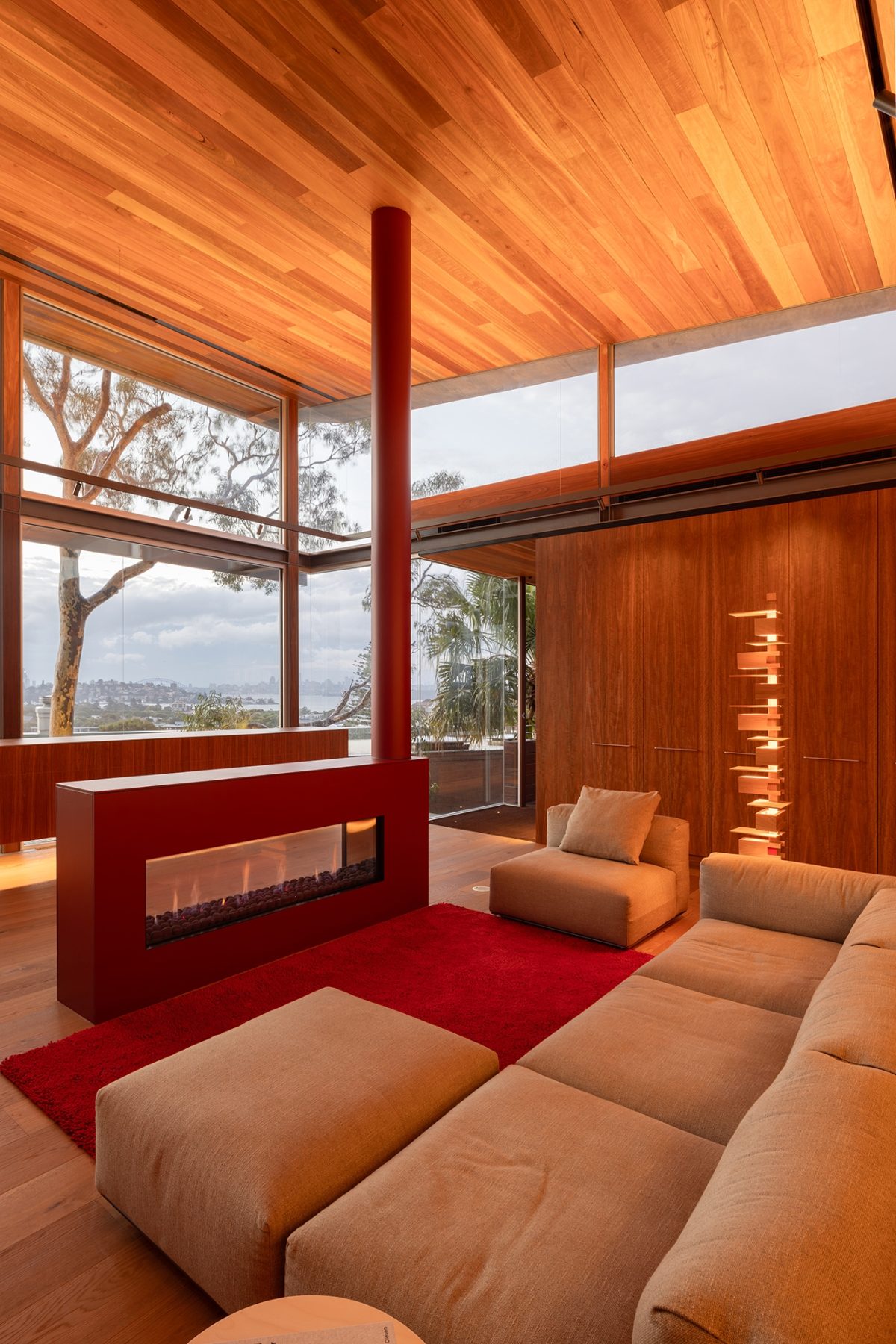
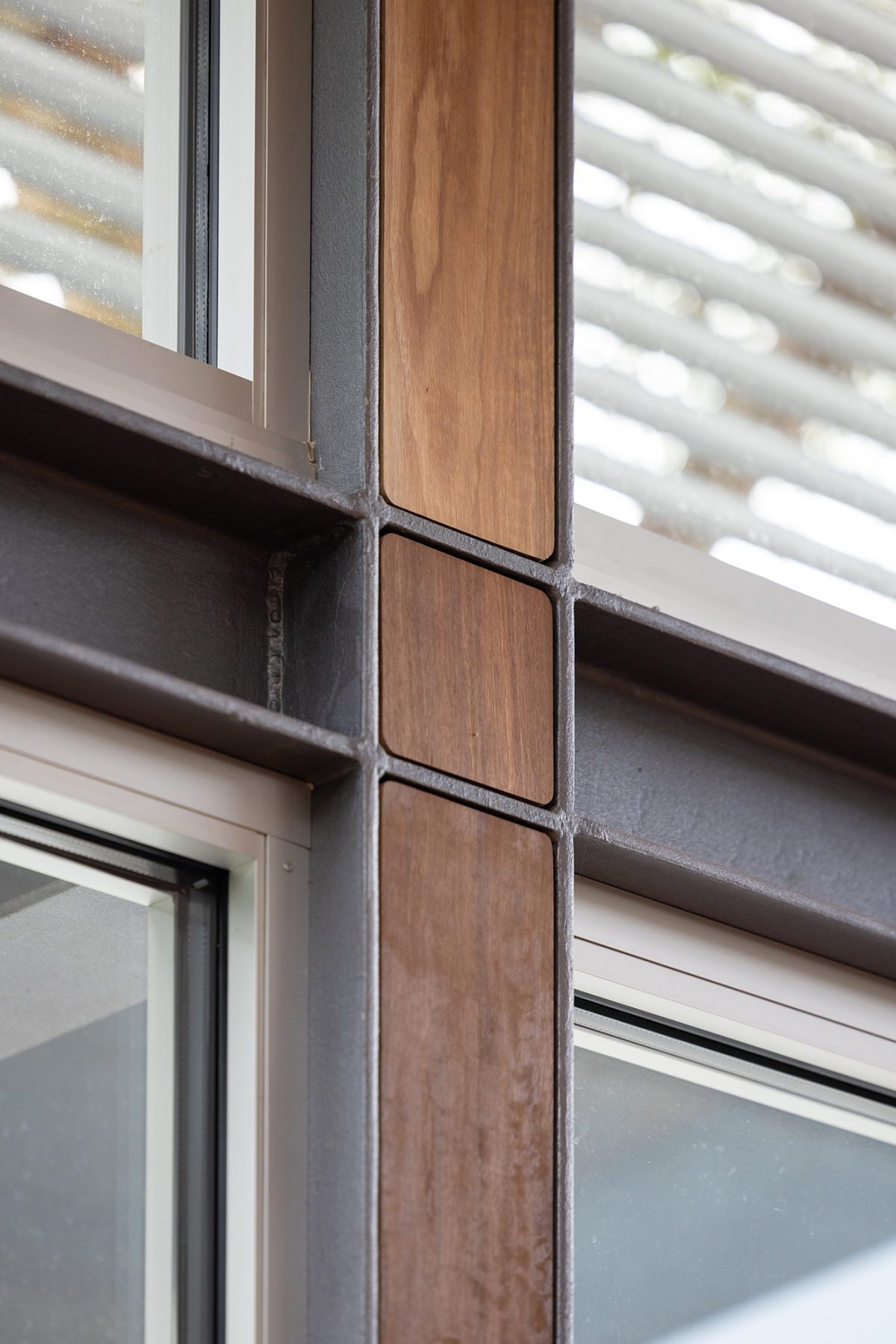
The living room was conceived as a grand space extending from the bookshelf that buttresses the eastern escarpment across the valley to Bellevue Hill and beyond, reaching the high-rise skyline of the city some six kilometres away. Inspired by Pierre Chareau’s Maison de Verre, the steel-and-glass façade forms a transparent envelope. This double-glazed enclosure, together with operable external blinds, acts as a veil that protects the interior from the intensity of the Australian summer sun.
As the primary social and public space within the house, the living room is conceived as a domestic piazza. Its five-metre-high ceiling embraces both the distant city views and the trees and landscape in the foreground. It is a place for gathering, welcoming guests and hosting daily life.
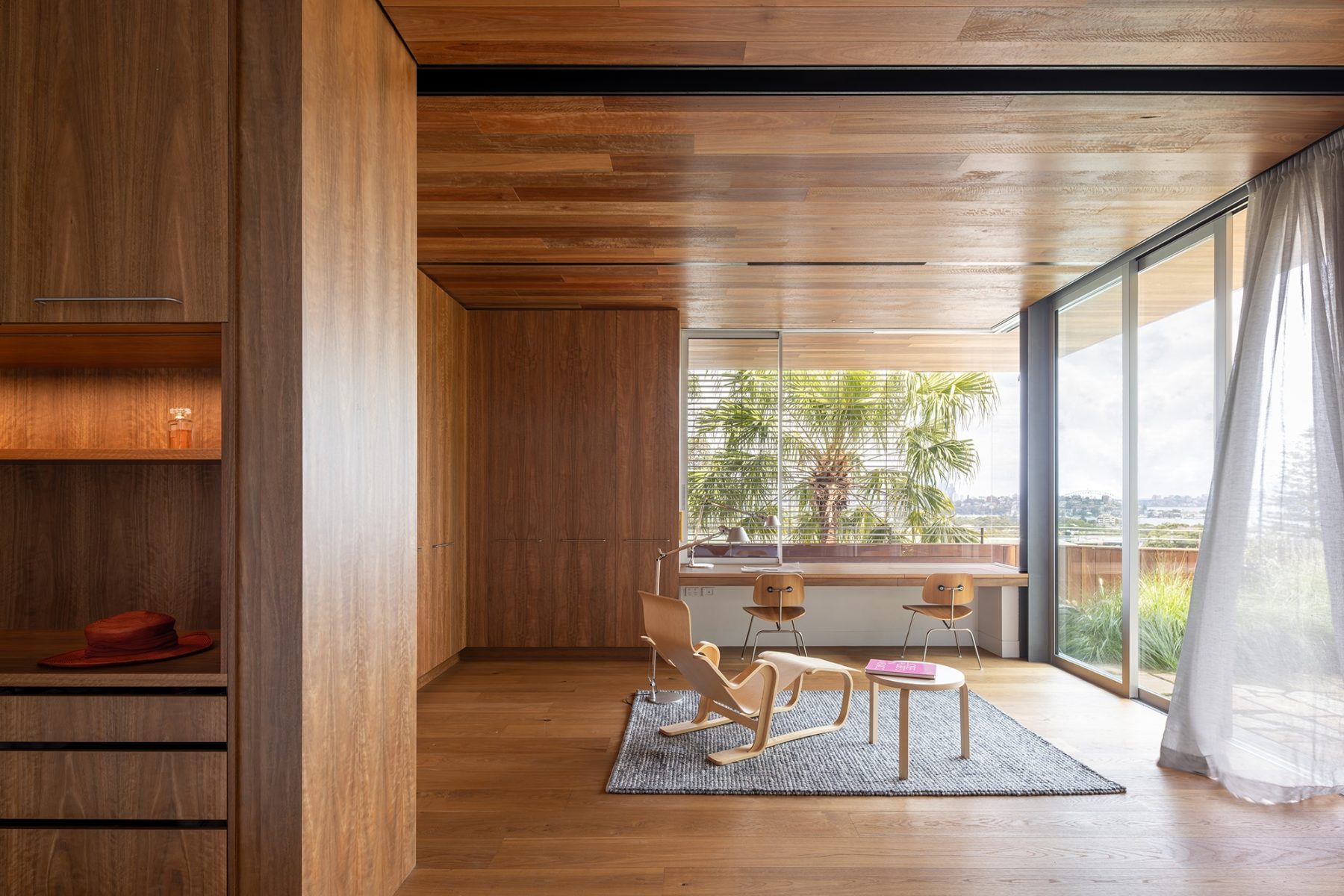
Prefabricated steel-and-glass construction, installed by crane, provided a pragmatic solution for building on such a difficult site. This approach is complemented by the extensive use of timber, including engineered oak flooring, spotted gum wall linings, ceilings, external cladding and joinery. Lighting and furnishings are integral to the architectural composition. Artworks are displayed wherever wall space permits, including a mural by Lin Utzon in the living room. Created following site visits and discussions during construction, the mural was conceived specifically for the space it occupies, becoming an integral part of the house itself.